The Furnished Flat Problem: What Your Space Says About Your Recovery After Divorce
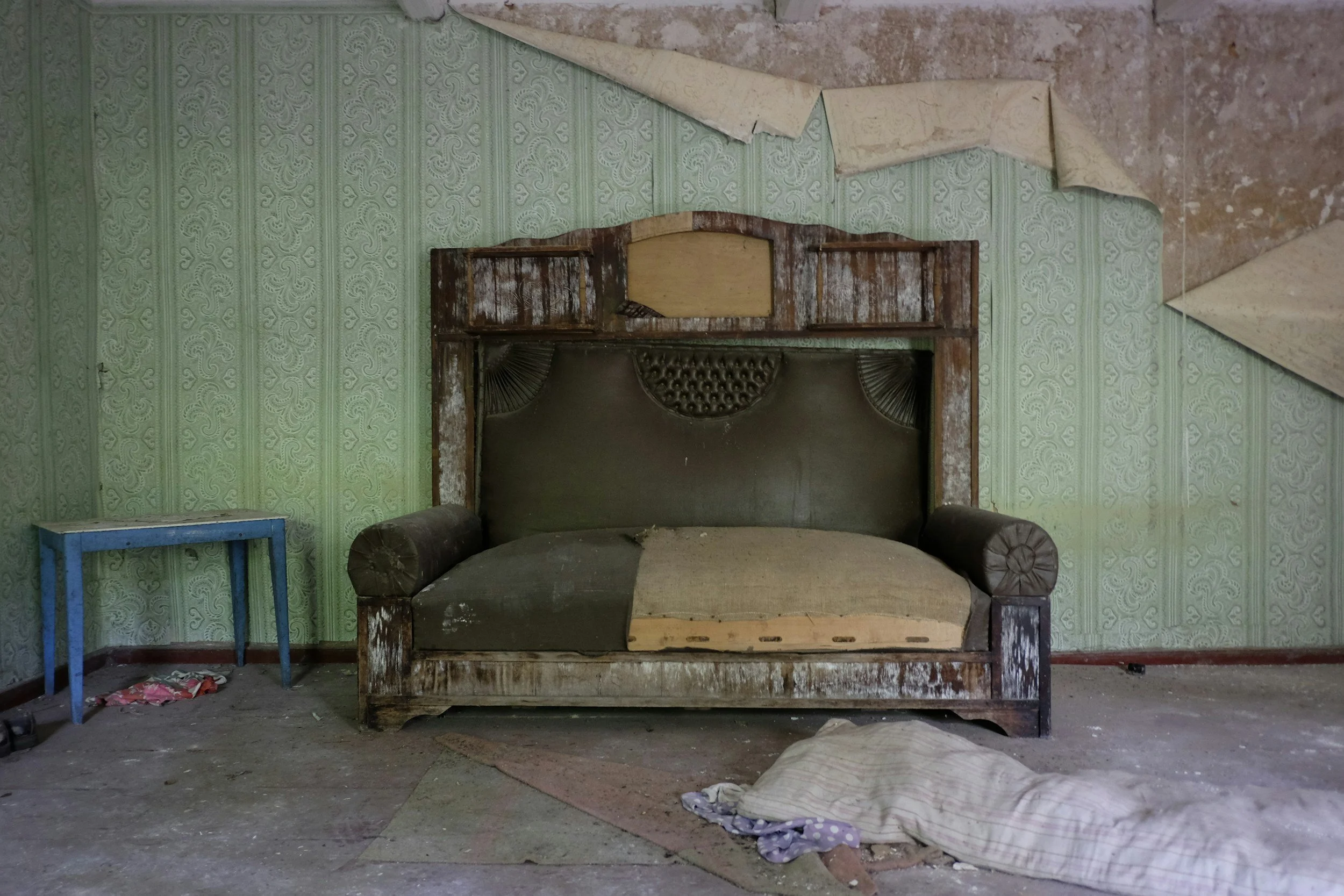
THE FURNISHED FLAT PROBLEM
There's a thing that happens to men after divorce that nobody talks about. Not the lawyers, not the mates, not the people who keep saying it gets easier.
You move out. You find a place. And you fill it with whatever's left over.
Maybe you took some furniture from the house. The stuff your ex didn't want, or the things you managed to negotiate out of the settlement. A couch that belonged to a different life. A bed frame that remembers the marriage. Plates you didn't choose. Curtains that were never yours.
Or maybe you arrived with almost nothing and the flat stayed that way. A mattress. A pan. A chair. Clothes in a bag because unpacking feels like admitting something you're not ready to admit.
I know this because I lived it. Moved into an unfurnished flat surrounded by leftovers from a past life. Stayed that way for two years. Two years before something in me said this has to change.
At the time I told myself it was practical. Temporary. No point spending money on a situation that might look different in six months.
That's what most men tell themselves. It sounds reasonable. It isn't.
What the flat is actually saying
The space around us isn't just backdrop. It's information.
When you walk into a flat that looks like a garage sale, like a man is passing through rather than living there, you're not looking at a furniture problem. You're looking at a state of mind made visible. The unsettled space and the unsettled man are the same thing. One is just easier to see than the other.
The flat filled with leftovers from the old life is particularly telling. Those objects aren't neutral. They are the past reflected into the present. The couch, the plates, someone else’s curtains that were never really yours, they extend the old story into the new space. The man living among them is still, in some way, living in the past. Physically relocated. Mentally still there.
The man in the nearly empty flat is doing something different but arriving at the same place. Refusing to settle in is refusing to accept that this is the life now. It looks like practicality. It's actually a form of resistance.
I've sat with men in spaces like this. Bought things off marketplace from men selling things to survive, living in conditions that could only be described as pitiful. Not lazy men. Not broken men. Men who were still waiting for the real life to resume. And everything around them, the bare walls, the makeshift shelves, the general sense of a space nobody had claimed, reflected that waiting back at them every single day.

The thing nobody tells you about acceptance
Here's what I've come to understand, both from my own experience and from working with men through this.
The furnished flat problem doesn't get solved by buying things. It gets solved by something that happens before that.
Acknowledgement and acceptance.
When a man can look at the space he's living in and actually see it, not explain it away, not defend it as temporary, just see it for what it is, something begins to shift. The witnessing changes it. The moment you stop looking past it and start looking at it, you've already started moving.
The acceptance isn't defeat. It's the opposite. Accepting that this is where you are right now, that this sparse, impermanent, half-assembled space is the current reality, is what breaks the waiting. You can't build something new while you're still waiting for the old thing to come back. Acceptance is what ends the wait.
For me, it was putting photographs on the walls. Images I'd taken myself. And then learning guitar. Neither of those things was practical. Neither of them made the flat more functional. But they were mine. Chosen by me, for no other reason than I wanted them there.
That's the moment the space stopped being temporary and started being mine.
What building actually looks like
It doesn't take much. That's what most men get wrong when they finally get to this point. They think building something new means a complete overhaul. New furniture, new space, new life, all at once.
One thing is enough to start.
Not something useful. Something wanted. A print on the wall. A plant you have to keep alive at all costs. A guitar you're learning badly. One object that has nothing to do with the old life and nothing to do with function. Just something that says, in the quietest possible way, I live here. This is mine. I'm building something.
The objects we bring into a space signal our intentions back to ourselves. That's not decoration. That's direction. It's the difference between a man who's camping in his own life and a man who's starting to build one.
Who this is for
If you've been in the same space for a year or more and not much has changed, in the flat or in yourself, pay attention to that.
Not as a judgment. As information.
The space you're living in is telling you something about where your head is. The leftover furniture from the marriage, the mattress on the floor, the walls with nothing on them. None of that is neutral. All of it is data.
You don't have to overhaul everything at once. You don't need a budget or a plan or a sudden burst of motivation.
You just need to see the space for what it is. Really see it. And then make one small move that's yours.
That's where it starts. Not with a new flat. With a decision that the one you're in is real, and worth living in.
If this is landing somewhere uncomfortable, that's worth paying attention to.
Sometimes the most useful thing is just having a conversation with someone who's been in the flat and come out the other side. That's what the chemistry call is for. Thirty minutes, no pitch, no pressure. Just an honest conversation about where you are and whether working together makes sense.
Book yours at treeoflifejourney.co.za