Self-Care for Burnt-Out Men: Why the Oxygen Mask Rule Matters at Work and at Home
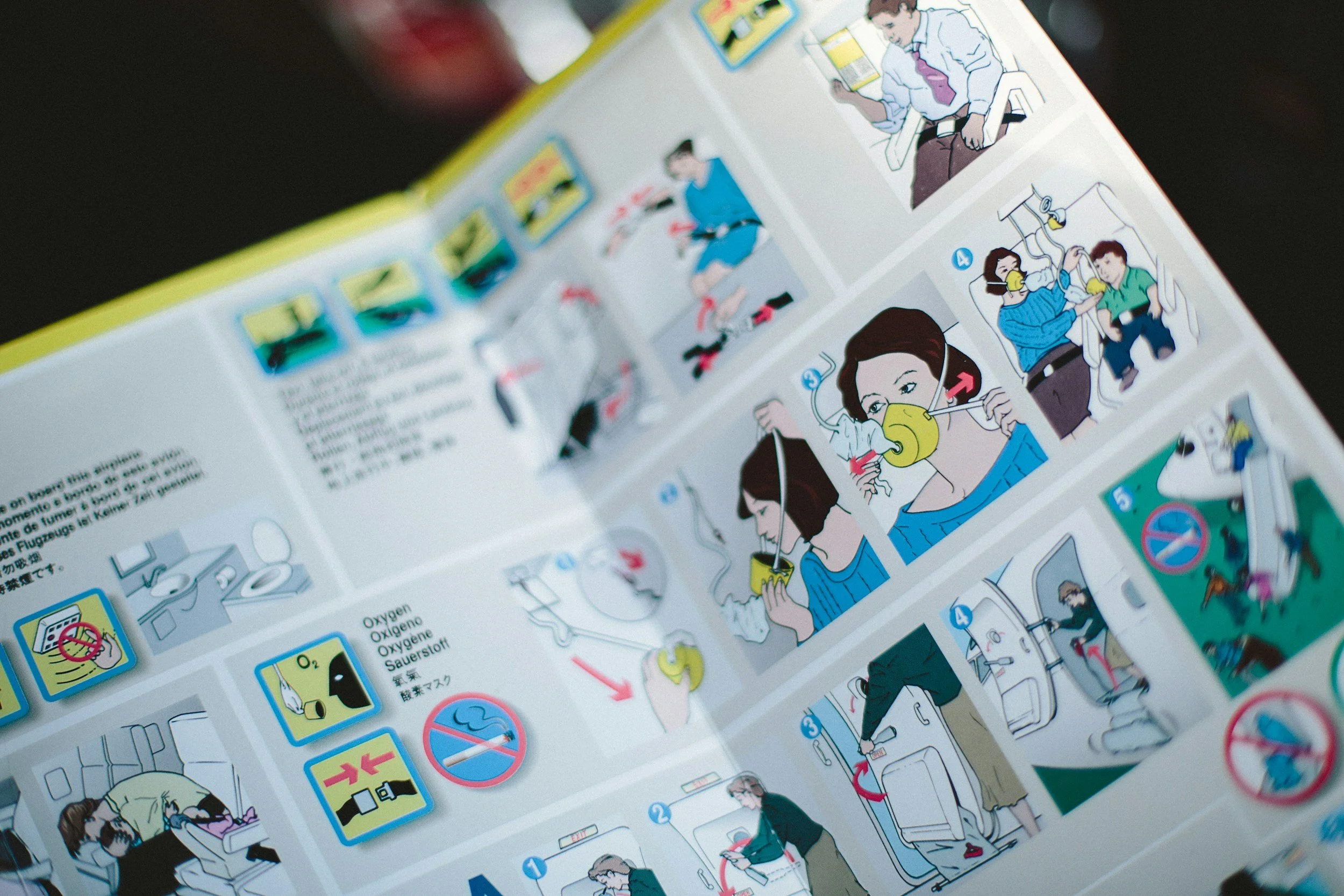
“Ladies and gentlemen, if the cabin loses pressure, oxygen masks will drop from the panel above you. Please fit your own mask securely before assisting others.”
More than likely, you’ve heard it dozens of times.
The instruction is calm. Unemotional. Non-negotiable.
Not because you matter more than the person next to you.
But because without oxygen, you are no help to anyone.
Most professional men ignore this rule in real life.
You wake up tired but get moving anyway. You carry the workload. You absorb the pressure. You stay steady for your team, your clients, your family. From the outside, everything looks fine. And you reinforce this by telling everyone it is. You even tell yourself it is.
But internally, something has shifted. Rest doesn’t restore you the way it used to. Evenings feel flat. You’re home, but not really there. You’re still functioning — it’s just costing you more and more as time goes by.
How Self-care is Misunderstood
This is where self-care gets misunderstood.
It’s often framed as indulgence. A luxury. Something soft. For many men, it feels self-centred. There’s work to do. People rely on you. Who has time for “self-care”? Be strong and man up!
But the oxygen mask rule isn’t indulgent. It’s structural. Oxygen is not a reward. It’s a requirement. Without it, life dies.
Self-care, in the context of burnout, isn’t about pampering. It’s about capacity.
When you are chronically depleted:
Your thinking narrows.
Decisions feel heavier.
Patience thins.
Small problems feel disproportionate.
Irritability rises faster than it should.
You may still be competent. But you are running on reduced supply. What could you manage if things were different?
Many capable men operate on an unspoken belief: “I can carry it.” And often, you can – for a long time. That’s part of the problem. Endurance hides the damage.
Don’t Ignore Your own Mask
Ignoring your own oxygen doesn’t make you strong. It just delays the point at which something gives. And it will. It always does.
Burnout isn’t always a dramatic collapse. More often, it’s slow depletion. A gradual thinning of energy and presence. You don’t fall apart. You just feel less like yourself. Less and less with each that passes.
Real self-care addresses the structure causing that depletion.
It is not:
Scrolling late into the night.
Zoning out in front of a screen.
Taking a weekend off only to be dreading Monday by the time Sunday afternoon rolls around.
That’s self-soothing. Temporary relief without structural change.
Self-care, in the context of burnout recovery, looks different.
It looks like:
Ending your workday properly instead of mentally carrying it into the evening.
Not replying immediately to every request.
Questioning responsibilities you’ve assumed but were never explicitly given.
Protecting one small part of your day that restores you instead of drains you.
Saying, “Let me get back to you,” instead of defaulting to ‘yes’.
These are not dramatic life overhauls. They are adjustments to the oxygen supply.
One reason self-care feels uncomfortable is guilt. If others are depending on you, stepping back can feel selfish. But the oxygen mask rule reframes that entirely.
Protecting your capacity protects the people who rely on you.
When you’re depleted:
You snap more easily at home.
You disengage in meetings.
You avoid decisions.
You withdraw rather than participate.
You feel trapped in routines that once felt manageable.
That’s not a character flaw. It’s low oxygen.
The order matters.
On a plane:
Fit your mask.
Breathe.
Then help others.
In life, it’s similar:
Notice what’s draining you.
Stabilise your load.
Then redesign how you show up.

Trying to be more present, more patient, more strategic while exhausted rarely works. You cannot out-discipline depletion.
The writer Audre Lorde put it plainly – “Caring for myself is not self-indulgence, it is self-preservation.”
Self-preservation is not weakness. It is a responsibility extended inward.
For professional men in midlife experiencing burnout, self-care is not about becoming a different person. It’s about staying present as the person you already are.
It’s about recognising that constant endurance is not sustainable leadership — at work or at home.
You don’t need to optimise yourself.
You need to breathe properly again.
The oxygen mask isn’t selfish.
It’s how you remain steady enough to help anyone at all.